Kapalabhati — Skull Shining Breath
A powerful Shodhan Kriya for cleansing and energizing
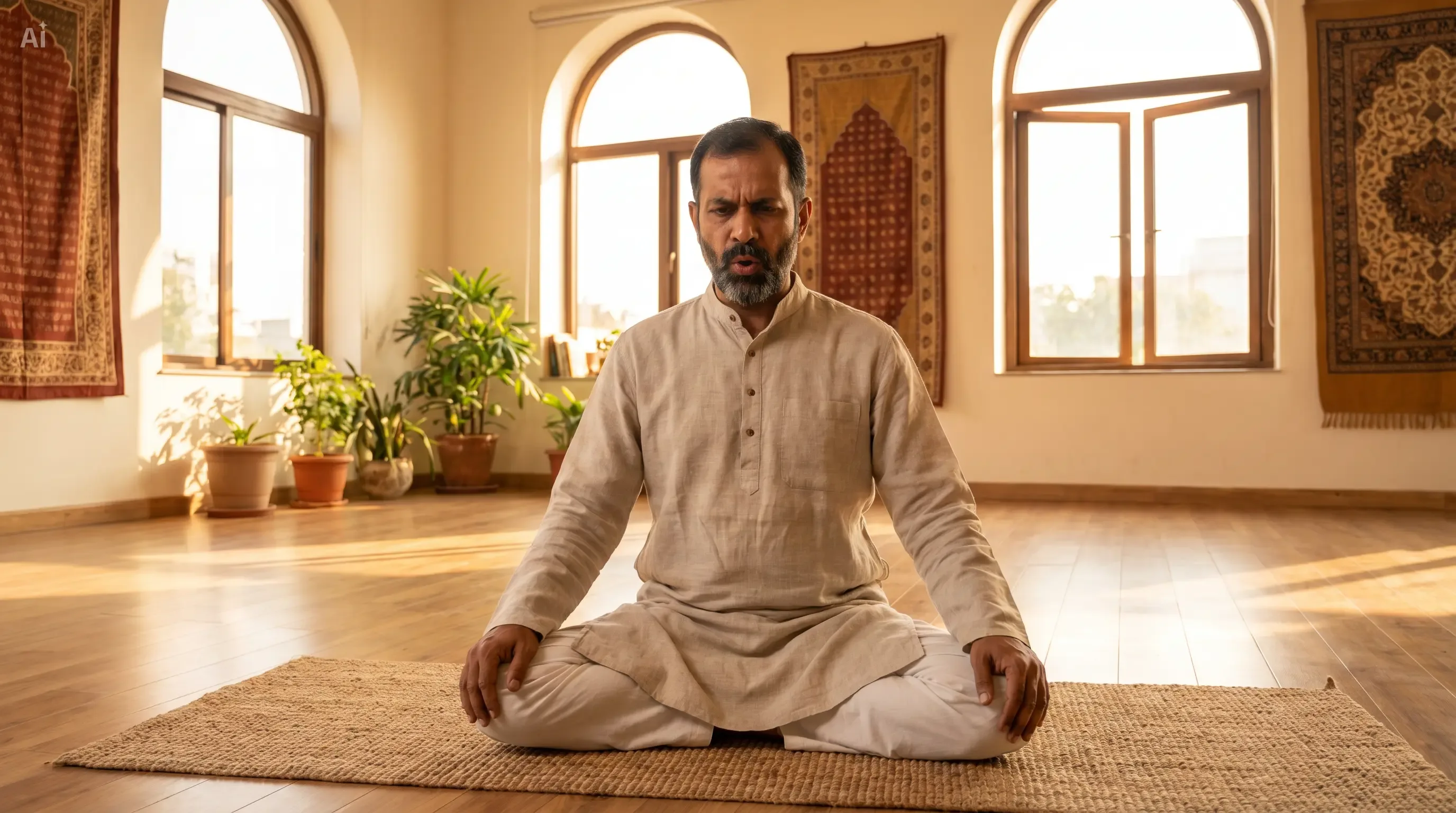

Kapalabhati is both a Pranayama and a Shodhan Kriya (cleansing practice) that purifies the respiratory system, energizes the brain, and awakens Prana. Essential in daily Rishiyog practice.
Guided Practice Steps
Move with intention and awareness
1
Seated Position
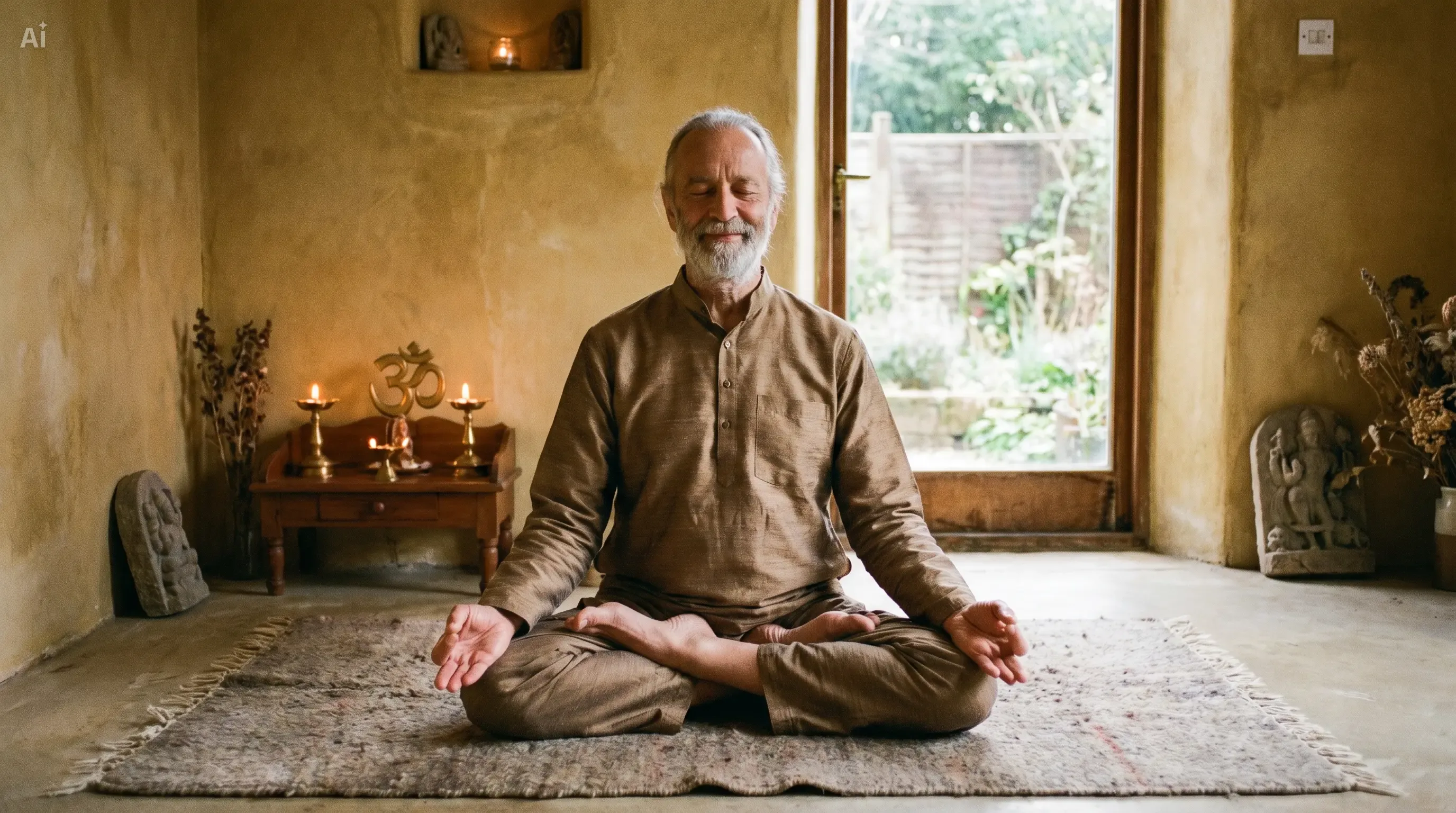
Sit in a comfortable meditative posture — Padmasana, Siddhasana, or Sukhasana. Spine erect, shoulders relaxed, hands on knees in Jnana Mudra. Close your eyes.
2
Round 1 — 30 Strokes

Take a deep breath in. Begin forceful exhalations through the nose by sharply contracting the abdominal muscles. Inhalation happens naturally and passively. Start with 30 strokes at a moderate pace.
3
Kumbhaka (Retention)
After the last exhalation, inhale deeply. Apply Jalandhara Bandha (chin lock) and Mula Bandha (root lock). Retain the breath comfortably for 15-30 seconds. Release Bandhas, exhale slowly.
4
Rounds 2 & 3
Rest for a few breaths, observing the energy in the body. Repeat for two more rounds, gradually increasing to 60 strokes per round as your practice matures.
Transformative Benefits
Nourish your body and mind
- Purifies the nasal passages and respiratory system
- Increases oxygen supply to the brain — enhances mental clarity
- Strengthens the abdominal muscles and improves digestion
- Activates the Manipura Chakra (solar plexus energy center)
- Removes Kapha dosha excess — beneficial for congestion and sluggishness
- Prepares the mind for Pranayama and meditation
Mindful Completion
Carry your practice forward
Kapalabhati literally means "skull shining" — it brings a luminous clarity to the mind. Practice on an empty stomach, preferably in the morning. Avoid during pregnancy, high blood pressure, or heart conditions. In the Rishi tradition, Kapalabhati is one of the six Shatkarmas (cleansing practices) described by Maharishi Gheranda.